
The homework, done honestly
Everything here exists so you can walk into a quote knowing what the trade knows. No prices (the measure decides those), no scare copy, no brochure gloss.
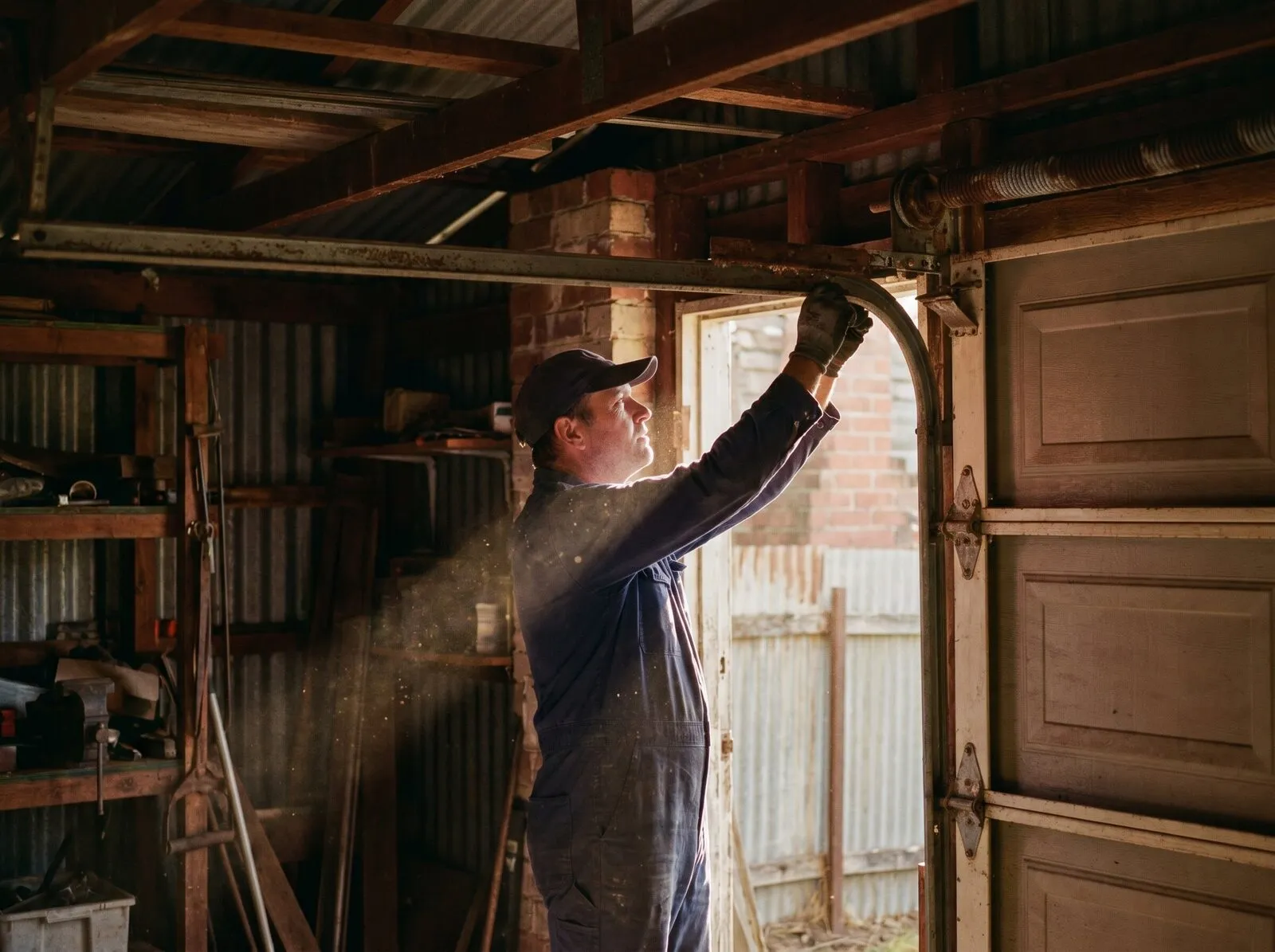
The repair-or-replace call, made the way we make it on site: what failed, what it's attached to, and what you want the garage to do next.
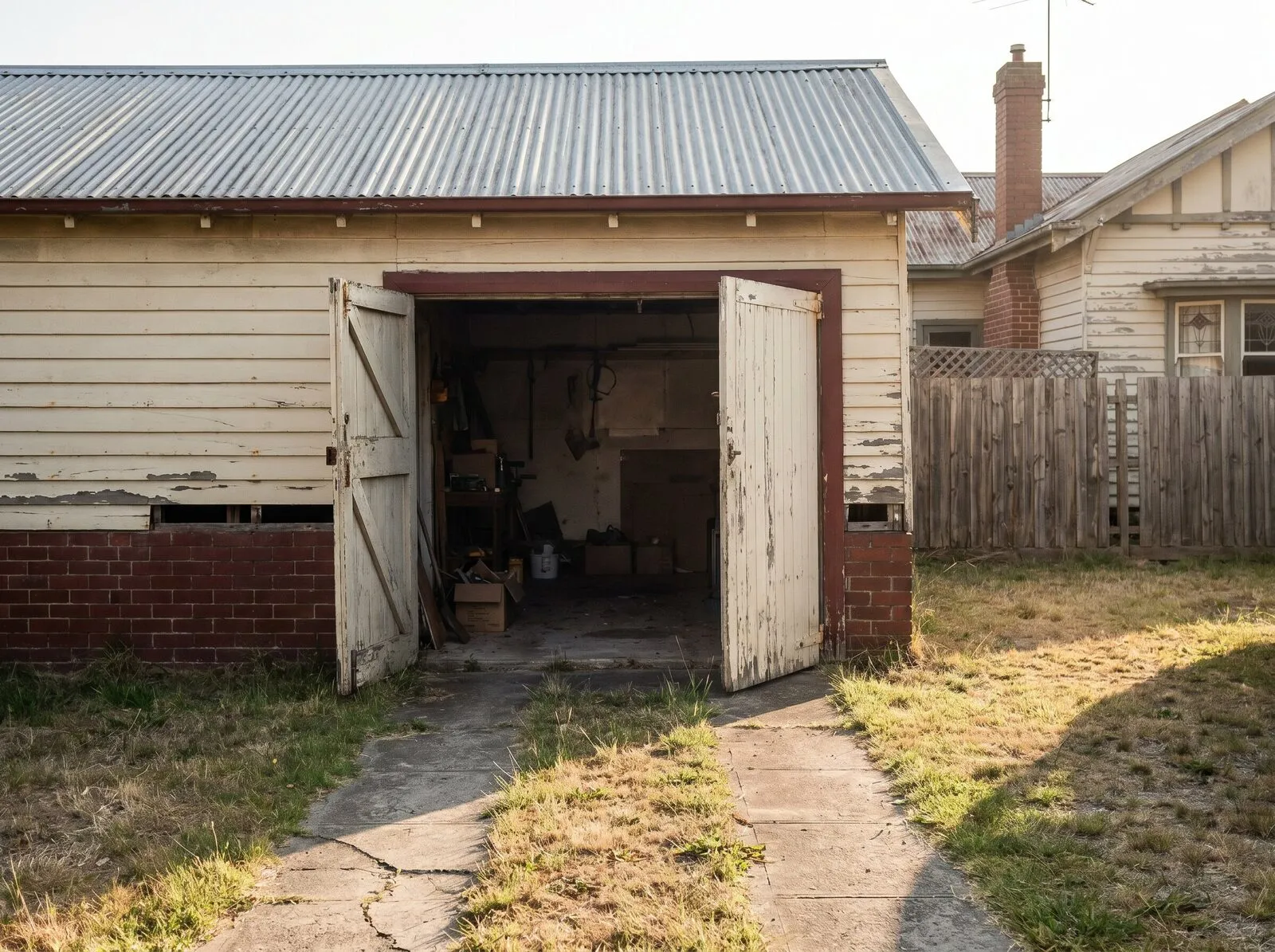
Headroom, side room, out-of-square frames and lane access: the fit question answered properly, with the door types compared side by side.
Prefer twenty seconds to twenty minutes? The Will It Fit checker flags the same friction interactively.
The trade's terms, translated
The words a garage door technician will use in your driveway, defined so the quote makes sense.
- Torsion spring
- The coiled spring on a bar above the opening that counterbalances the door's weight. When it snaps (a loud bang is the classic sign), the door effectively weighs its full weight again and won't lift. Springs are rated in open-close cycles and wear out on a schedule, not by luck.
- Extension spring
- An older counterbalance style: springs stretched along the tracks either side of the door. Common on older tilt and sectional doors; usually upgraded to torsion springs during major work.
- Off the track
- The door's rollers have jumped out of the steel tracks that guide them, so the door jams, sits crooked or won't move. A door off its track is unstable; it wants a technician, not a shoulder.
- Gone heavy
- Trade shorthand for a door whose spring has lost tension: it still opens, but you feel the weight where the spring used to carry it. It's the warning before the bang.
- Headroom
- The clear space between the top of the door opening and the ceiling (or the lowest obstruction) inside the garage. It decides which door types can physically be fitted: a sectional needs the most, a roller the least.
- Side room
- The wall space either side of the opening, needed for tracks, the spring bar and the roller drum's brackets. Old narrow garages are often short of it.
- Sectional door
- A door of hinged horizontal panels that rises and slides back along ceiling tracks. The dominant modern residential type in Australia.
- Roller door
- A curtain of interlocked steel slats that rolls up into a compact drum above the opening. Needs the least headroom of the common types.
- Tilt door
- A single rigid panel that tilts outward and up on pivoting arms. Standard in Australian garages built before roughly the 1990s; most of Mayfield's originals are tilts. New installs are rare, so tilt work is mostly repair work.
- Opener / motor
- The powered unit that drives the door: a rail-drive motor on the ceiling for sectional and tilt doors, or a tubular motor inside the drum for roller doors.
- Safety beams (photo-eyes)
- The infrared sensors near the floor either side of the opening. If the beam is broken while the door closes, the door reverses. An opener that refuses to close, or reopens immediately, very often has a beam fault, not a motor fault.
- Manual release
- The (usually red) cord hanging from a rail-drive opener that disconnects the door from the motor so it can be lifted by hand in a blackout. Worth knowing about before you need it, and only safe to use on a door whose springs are intact.
Tell us about the door
Broken this morning or being planned for next spring, it starts the same way: a few lines about the door and the block, and a straight answer back.